Paris Travel Guide Fine Dining Gardens Shopping Museums and Safe Local Phrases
Paris rewards travellers who slow down. The city can be grand and polished, with gilded dining rooms, couture storefronts, and museum halls filled with world-famous art. It can also be quiet, green, and deeply local, especially if you leave time for a garden bench, a neighbourhood café, and a polite “bonjour” before asking for help.
This guide brings together the refined side of Paris without losing sight of the practical details. It covers fine dining, botanical gardens, world-class shopping, landmarks, museums, cultural places, trip preparation, safety advice, and useful French phrases for a smoother visit.

Plan the elegant Paris trip before you arrive
Travelling to Paris is easier when the basics are settled before the plane lands. The finer side of the city often needs reservations, timed tickets, and a little planning around neighbourhoods.
Start with the essentials:
Valid passport
Canadian travellers should check that their passport is valid for the full trip and meets current entry requirements before departure.
Travel insurance
Choose coverage for medical care, trip interruption, lost luggage, and delays. Keep digital and paper copies of policy details.
Restaurant bookings
Fine dining rooms, Michelin-starred restaurants, and popular bistros can book up well ahead of time. Reserve early, especially for dinner.
Museum and landmark tickets
Book timed entries for major places when possible. This can reduce waiting and help you plan your day.
Comfortable dress shoes
Paris is walkable, but cobblestones, stairs, and métro corridors can be hard on your feet. Bring shoes that look polished and feel supportive.
A contactless payment card
Cards are widely accepted, though it helps to carry a small amount of euros for markets, tips, and small purchases.
A good Paris itinerary groups visits by area. Spend one day around the Louvre, Palais Royal, and the Tuileries. Use another for Saint-Germain-des-Prés, the Musée d’Orsay, and Luxembourg Garden. Save a separate day for the Eiffel Tower, Seine walks, and the Right Bank’s shopping streets.
For flights from Canada, plan for jet lag. Try to land, drop your bags, eat a light meal, and walk outside. Sunlight and gentle movement help more than a long daytime nap.
Eat well in the city of serious dining
Paris is one of the world’s great dining capitals, but refined dining does not only mean white tablecloths and rare wines. It can be a long lunch in a historic brasserie, a tasting menu from a young chef, or a perfect pastry eaten near a park.
Fine dining in Paris usually works best with a reservation. Many restaurants open for set lunch and dinner hours, and kitchens may close between services. Lunch menus can be a smart way to enjoy exceptional cooking at a lower cost than dinner.
Look for these dining experiences:
Classic brasseries and grand dining rooms
Historic brasseries offer polished service, seafood towers, roast chicken, steak frites, onion soup, and desserts such as profiteroles or tarte Tatin. The setting is often part of the pleasure, with mirrors, banquettes, brass rails, and a room full of conversation.
Dress neatly, even if the restaurant does not require formal clothing. A jacket is rarely needed everywhere, but smart casual clothing fits most refined dining rooms.
Michelin-starred and tasting menu restaurants
Paris has many celebrated fine dining restaurants, from established temples of French cuisine to smaller modern rooms. Expect careful pacing, elegant plating, and knowledgeable service.
When booking, mention dietary restrictions clearly. If the menu is fixed, ask in advance whether changes are possible. Arrive on time, since late arrivals can affect a tasting menu service.
Pâtisseries, fromageries, and wine bars
Not every memorable meal needs a reservation. A day can feel luxurious with breakfast pastries, cheese from a specialist shop, and a glass of wine in a quiet bar. Try classics such as croissants, éclairs, financiers, macarons, and seasonal fruit tarts.
For a picnic, buy bread, cheese, fruit, and something sweet, then eat in a park where picnics are permitted. Keep the area clean and follow posted rules.

Find quiet beauty in Paris gardens and botanical spaces
Paris is full of formal gardens, hidden courtyards, and leafy escapes. The best days balance shopping, dining, travel, gardens, and art without rushing from one famous door to another.
Jardin des Tuileries
Between the Louvre and Place de la Concorde, the Tuileries is one of the city’s most graceful walks. Gravel paths, fountains, clipped trees, sculptures, and green chairs make it ideal before or after a museum visit.
Come early for a softer mood, or late afternoon when the light warms the stone façades.
Jardin du Luxembourg
The Luxembourg Garden in the 6th arrondissement feels both grand and local. Parisians read by the fountains, children sail small boats, and visitors admire the palace, statues, and tree-lined paths.
It pairs beautifully with Saint-Germain-des-Prés, bookshops, galleries, and a long café stop.
Jardin des Plantes
For botanical gardens, the Jardin des Plantes is the essential Paris address. It includes themed gardens, greenhouses, and natural history museums nearby. It suits travellers who want nature, science, and calm in one place.
The greenhouses are especially pleasing in colder months, when tropical plants and warm air offer a welcome break from grey weather.
Parc Monceau
Parc Monceau is elegant, romantic, and less obvious than the central gardens. It has curved paths, statues, mature trees, and a refined residential feel. It works well before shopping near the Champs-Élysées or visiting nearby museums.
Shop with purpose, from couture to books
Paris shopping can mean haute couture, perfume, jewellery, antique prints, handmade gloves, rare books, kitchenware, or a scarf that you wear for years. The trick is to choose your area by mood.
Avenue Montaigne and Rue du Faubourg Saint-Honoré
These streets are famous for luxury fashion houses, jewellery, and polished window displays. Even if you are only browsing, the craftsmanship and styling make the walk worthwhile.
Dress comfortably but neatly. Security staff may greet you at the door, and some boutiques control entry when busy. A calm, polite approach goes a long way.
Le Marais
Le Marais offers a mix of designer shops, independent boutiques, vintage finds, galleries, cafés, and historic streets. It is a good area for shoppers who want style without spending the whole day in luxury flagships.
Leave time for Place des Vosges, one of the most beautiful squares in Paris.
Saint-Germain-des-Prés
This Left Bank area is ideal for books, stationery, fragrance, home goods, fashion, and art galleries. It has a literary history but still feels stylish and lived-in.
A good route links the church of Saint-Germain-des-Prés, nearby cafés, Rue Bonaparte, and Luxembourg Garden.
Department stores
Paris department stores offer fashion, accessories, beauty, gourmet food halls, and rooftop views in one stop. They are practical if the weather turns or you want tax-free shopping assistance. Bring your passport or a copy if you plan to request tourist tax refund paperwork.

Visit landmarks that still feel worth the attention
Some Paris landmarks are famous for good reason. They give shape to the city and help first-time visitors understand its scale, history, and beauty.
Eiffel Tower and Champ de Mars
The Eiffel Tower is best experienced in more than one way. See it up close from the Champ de Mars, across the river from Trocadéro, and from a Seine bridge at night. If you want to go up, book ahead and check the weather. Views are best on clear days.
Notre-Dame and Île de la Cité
Notre-Dame sits at the historic heart of Paris. Even when access changes due to restoration schedules or crowd controls, the surrounding island is worth visiting. Walk by Sainte-Chapelle for its stained glass, the Conciergerie for medieval history, and the riverbanks for classic views.
Arc de Triomphe and Champs-Élysées
The Arc de Triomphe offers one of the best city views, with avenues radiating from the monument. Use the underground passage to reach it safely. Do not cross the traffic circle at street level.
The Champs-Élysées is busy and commercial, but it remains a grand axis. For a more refined experience, continue toward Avenue Montaigne or Parc Monceau.
Sacré-Cœur and Montmartre
Montmartre can be crowded, yet the basilica and hilltop views are memorable. Go early in the morning for quieter streets. Wander beyond the busiest square to find staircases, small museums, and village-like corners.
Make time for museums and cultural places
Paris has more museums than most travellers can reasonably visit in one trip. Choose a few with care instead of trying to collect them all.
The Louvre
The Louvre is vast. It holds the Mona Lisa, the Venus de Milo, ancient objects, French painting, Islamic art, decorative arts, and royal palace rooms. Pick two or three sections before you arrive. A focused visit is far better than a tired march through every wing.
Enter with a timed ticket if available, and expect security checks. Wear comfortable shoes.
Musée d’Orsay
Set in a former railway station, the Musée d’Orsay is known for Impressionist and Post-Impressionist art. Monet, Degas, Renoir, Van Gogh, and many others appear here. The building itself is part of the appeal, especially the grand clock and open hall.
Centre Pompidou
For modern and contemporary art, the Centre Pompidou offers a different Paris mood. Its industrial exterior, broad views, and strong collections make it a useful contrast to classical museums.
Check opening details before building your plans, since large cultural sites can change hours for renovations, strikes, or special events.
Palais Garnier
The Paris opera house is one of the city’s great cultural interiors. Even if you do not attend a performance, a daytime visit can reveal marble staircases, painted ceilings, gilded rooms, and theatrical detail.
Smaller museums and cultural spaces
Consider the Musée Rodin for sculpture and gardens, Musée de l’Orangerie for Monet’s water lilies, Musée Carnavalet for Paris history, and the Panthéon for architecture and national memory. Smaller sites often create the most peaceful experiences.

Stay safe while enjoying Paris
Paris is generally manageable for careful travellers, but petty theft can happen in crowded places. Use the same alert habits you would use in any major city.
Keep these safety practices in mind:
Watch your belongings in crowded areas
Pickpocketing is more common around major landmarks, métro stations, busy trains, and tourist streets. Use a zipped crossbody bag or inner pocket.
Avoid leaving your phone on café tables
A phone placed near the edge of a table can disappear quickly. Keep it in your hand, pocket, or bag.
Use official taxis or trusted rides
At airports and train stations, follow signs to official taxi ranks. Avoid drivers who approach you inside the terminal.
Be cautious with street petitions and distraction scams
If someone asks you to sign something near a landmark, keep walking politely. Distraction is often the point.
Plan late-night transport
Know how you will get back to your hotel after dinner. Save the address offline and keep your phone charged.
Respect demonstrations and police barriers
Paris sometimes has protests or strikes. Avoid large gatherings if you do not understand what is happening, and follow local instructions.
For emergencies in France, 112 is the general European emergency number. Keep your hotel address, insurance details, and emergency contacts accessible offline.
Use polite French phrases with locals
A little French changes the tone of an interaction. You do not need perfect grammar. You do need to greet people before asking for something. In Paris, starting with “Bonjour” is basic courtesy in shops, cafés, hotels, and museums.
English meaning | French phrase | How to use it |
Hello | Bonjour | Use during the day before any request. |
Good evening | Bonsoir | Use in the evening. |
Please | S’il vous plaît | Add it to requests. |
Thank you | Merci | Simple and always useful. |
Thank you very much | Merci beaucoup | Use when someone has been helpful. |
Excuse me | Excusez-moi | Use to get attention or pass by. |
Sorry | Pardon | Use for small bumps or mistakes. |
Do you speak English? | Parlez-vous anglais? | Ask after greeting in French. |
I don’t speak French well | Je ne parle pas bien français | Helpful if you need patience. |
Could you help me? | Pouvez-vous m’aider? | Useful in stations, hotels, and shops. |
Where is the métro? | Où est le métro? | Good for directions. |
How much does it cost? | Combien ça coûte? | Useful in shops and markets. |
I have a reservation | J’ai une réservation | Use at restaurants and hotels. |
The bill, please | L’addition, s’il vous plaît | Use in restaurants when ready to pay. |
Have a good day | Bonne journée | Say when leaving during the day. |
Goodbye | Au revoir | Say when leaving shops or cafés. |
Try these full polite sentences:
Bonjour, parlez-vous anglais, s’il vous plaît?
Hello, do you speak English, please?
Excusez-moi, je cherche le Musée d’Orsay.
Excuse me, I am looking for the Musée d’Orsay.
Bonsoir, j’ai une réservation au nom de Martin.
Good evening, I have a reservation under the name Martin.
Pouvez-vous m’aider à appeler un taxi, s’il vous plaît?
Could you help me call a taxi, please?
Merci beaucoup pour votre aide.
Thank you very much for your help.
Speak softly, especially in restaurants, museums, and on public transport. Paris is a large city, but many public spaces run on quiet courtesy.
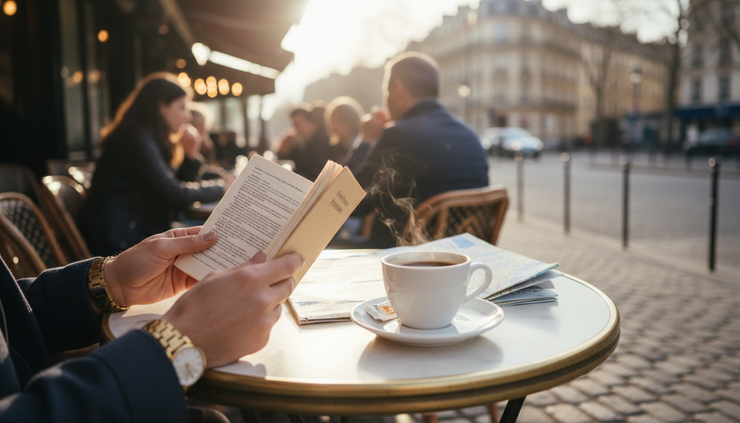
Build a Paris itinerary that feels refined, not rushed
A finer Paris trip is not about spending all day in expensive places. It is about choosing well, allowing time, and noticing detail. Pair a major museum with a garden. Follow shopping with a quiet lunch. See a landmark from several angles instead of racing to the next one.
A satisfying three-day rhythm could look like this:
Day | Morning | Afternoon | Evening |
Day 1 | Louvre and Palais Royal | Tuileries and luxury shopping nearby | Classic brasserie dinner |
Day 2 | Musée d’Orsay | Saint-Germain-des-Prés and Luxembourg Garden | Wine bar or tasting menu |
Day 3 | Eiffel Tower views | Seine walk and smaller museum | Opera, concert, or refined café night |
Leave room for weather, closures, and mood. Paris is often best when the plan has space in it.
Before you go, reserve the experiences that matter most, learn a few polite phrases, and keep safety habits simple and steady. Then let the city do what it does best: turn a walk, a meal, a garden, or a museum room into the part of the trip you remember most.
Comments